The Collective Emergence and Inclusive and Sustainable Development Chair — ECDID — is the Humanities and Social Sciences division of École Centrale Casablanca’s “Complex Systems and Interactions” Research Centre.
Its objective is to assess the potential and degree of emergence of a human community.
In this context, “emergence” refers to:
“Collective-interest dynamics that are transformative, desired and self-constructed by the communities that drive them, bringing about a significant qualitative change in well-being, value creation and harmonious coexistence.”
For a Morocco of Emergence: In Search of an Inclusive and Sustainable Society, policy paper, Economia, Les Citoyens, Friedrich-Ebert Foundation and Oxfam, 2020, p. 63.
The Chair’s primary objective is to develop an index that will classify the communities studied into four categories:
pre-emergent;
emergent;
balanced following emergence;
declining.
Ultimately, this index is intended to serve as a decision-support tool for public authorities, private institutions and third-sector organisations at territorial level. It will help them support emerging dynamics and establish inclusive and sustainable forms of development within the communities concerned.
The Chair’s second objective is to use the humanities and social sciences to study social processes of emergence and innovation, as well as the relationships between micro-, meso- and macro-level approaches, with the aim of developing new models of inclusive and sustainable development.
CHAIR HOLDER AND PERMANENT MEMBER
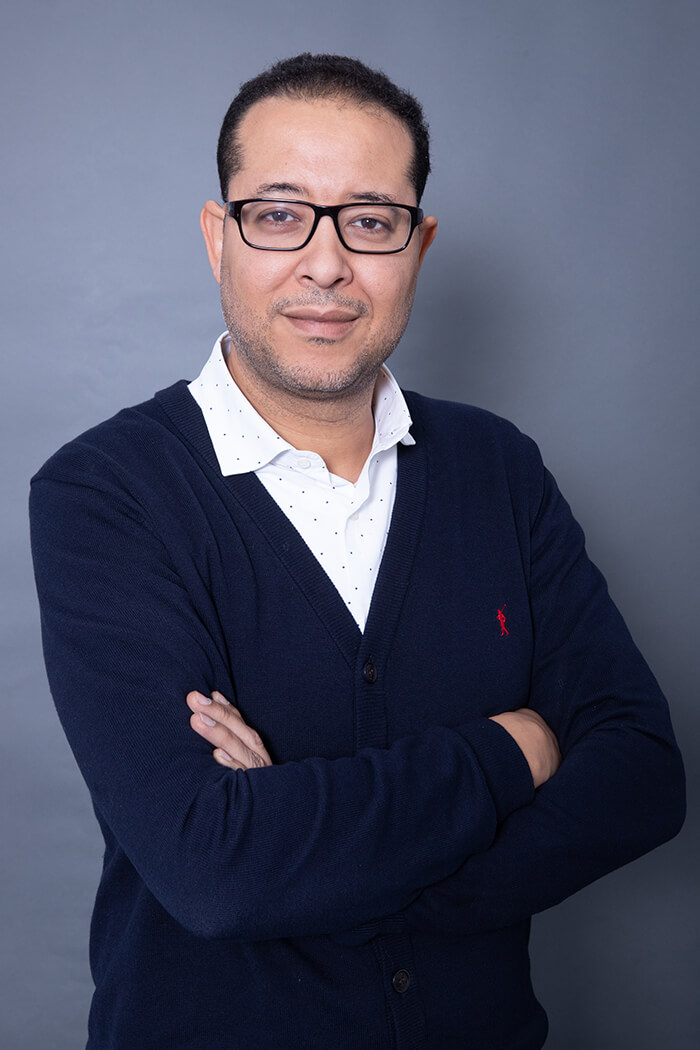
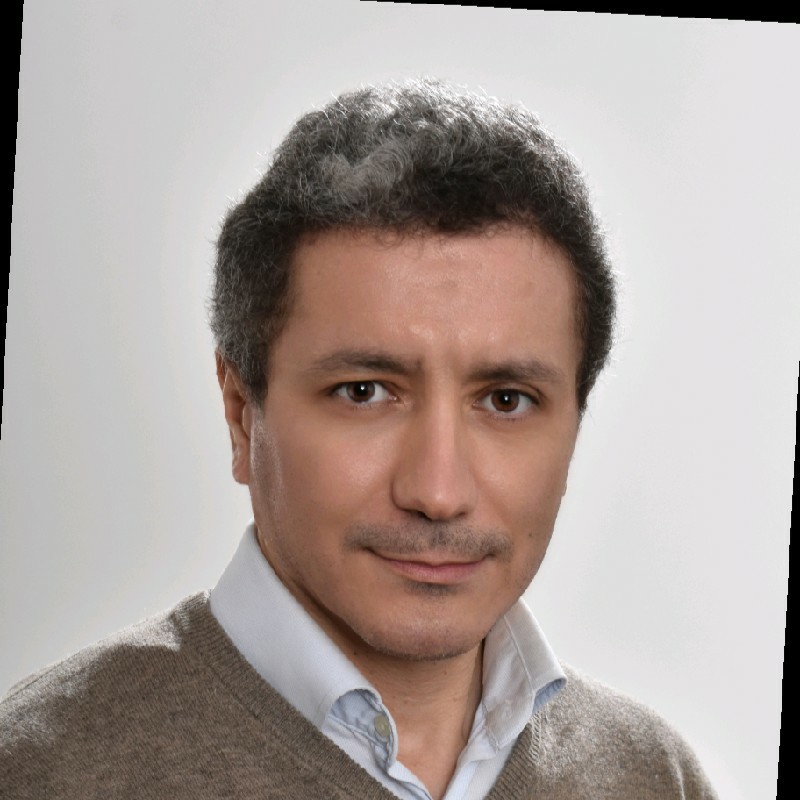
Jean-Pierre Llored
Jean-Pierre Llored is a Lecturer and Researcher in the Humanities and Social Sciences. He holds an Accreditation to Supervise Research in Philosophy, Epistemology, and the History of Science and Technology.
He is:
Coordinator of the Humanities and Social Sciences;
Scientific Director of the “Collective Emergence and Inclusive Development” Chair;
a Lecturer and Researcher affiliated with the Humanities and Social Sciences Department at CentraleSupélec in France;
an Associate Researcher at IDHES, ENS Paris-Saclay, France;
Deputy Editor of the journal Foundations of Chemistry, published by Springer;
Deputy Editor-in-Chief for Philosophy of the International Journal of Bioethics and the Ethics of Sciences, published by Eska.
He has teaching and research experience at several prestigious universities, including:
the University of Oxford;
the University of Cambridge;
the University of Bristol;
Université Libre de Bruxelles;
Vrije Universiteit Brussel;
Technische Universität Darmstadt;
Sorbonne University;
ENS Cachan;
Université de Paris.
He has also taught at engineering schools including:
École Polytechnique;
Mines Paris – PSL;
CentraleSupélec;
Centrale Nantes;
Chimie ParisTech;
ESIEE Paris.
He also teaches in the Master’s programme in Artificial Intelligence Law at the Institut Catholique de Paris.
RESEARCH THEMES
The research themes of the Collective Emergence and Inclusive and Sustainable Development Chair — ECDID — focus on emergence, defined as collective-interest dynamics that are transformative, desired and self-constructed by the communities that drive them, and which bring about significant qualitative changes in well-being, value creation and harmonious coexistence.
The Chair’s research focuses on:
understanding these emergence processes;
quantifying a community’s degree and potential for emergence at a given point in time;
promoting actions that can support the socio-economic development of other communities through inclusive and sustainable approaches.
This research requires collaboration between the humanities and social sciences, computer science and mathematics, as well as the implementation of field-based initiatives.
In addition, the Chair conducts epistemological studies on the physical and mathematical models and computer simulations used to understand social and entrepreneurial success, as well as social processes.
In doing so, it incorporates philosophical research on complexity sciences and the digital transformation of the socio-economic sphere.
Finally, the Chair seeks to develop ethical research on the relationships between science, emerging NBIC technologies — particularly artificial intelligence, nanotechnologies and biotechnologies — and society.
RESEARCH AREAS
COLLECTIVE EMERGENCE AND THE DEVELOPMENT OF AN EMERGENCE INDEX
This research area examines emergence, understood as collective-interest dynamics that are transformative, desired and self-constructed by the communities that drive them, and which bring about a significant qualitative change in well-being, value creation and harmonious coexistence.
EPISTEMOLOGY OF COMPLEXITY, DATA SCIENCE AND ARTIFICIAL INTELLIGENCE
A second research area, drawing on epistemology, sociology and the philosophy of science, examines complexity sciences themselves and the ways in which science, in the broadest sense, connects micro-, meso- and macro-level descriptions to understand collective phenomena.
RISKS, ETHICS AND PROFESSIONAL RESPONSIBILITY: SCIENCE, NBIC TECHNOLOGIES, SOCIETY AND THE ENVIRONMENT
This third research area mobilises all branches of ethics, including applied ethics, metaethics and normative ethics, as well as the epistemology of risk, particularly the study of fuzzy logic.
Its objective is to analyse the relationships between contemporary science, emerging NBIC technologies and society, while incorporating sustainable and environmental perspectives.
RESEARCH PROJECTS CONDUCTED BY OUR MEMBERS
SOCIAL TRANSFORMATION INDICES AND THE EMERGENCE INDEX
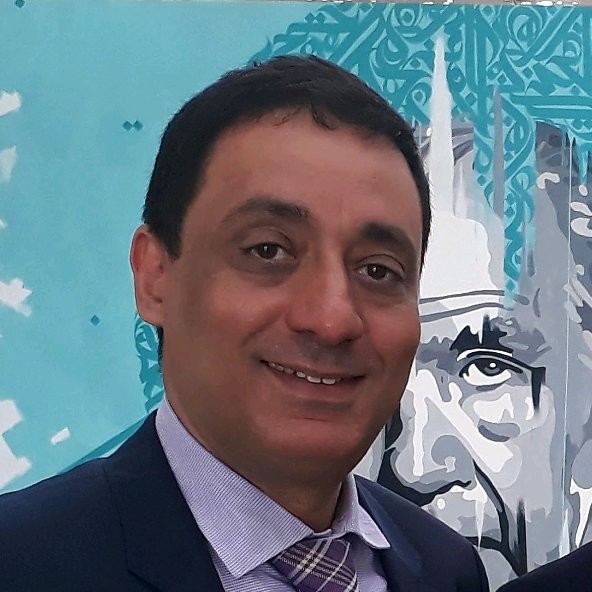
The Collective Emergence and Inclusive Development Chair — ECDI — of the Fondation de l’École Centrale, in partnership with the Transilience Institute in Casablanca, studies collective emergence and socio-economic development models in Africa.
Within this framework, emergence is defined as:
“Collective-interest dynamics that are transformative, desired and self-constructed by the communities that drive them, bringing about a significant qualitative change in well-being, value creation and harmonious coexistence.”
For a Morocco of Emergence: In Search of an Inclusive and Sustainable Society, policy paper, Economia, 2020, p. 63.
These dynamics are not managed by the State, although the State may sometimes encourage them. Their initiation may nevertheless be supported by catalysts from outside the community.
The term “emergence” is used only when the processes involved and their effects develop over the long term, grow over time, and when most of the governance and “energy for change” come from within the community that initiated them.
Emergence as a research topic requires a comprehensive consideration of the various macro-, meso- and micro-levels, dimensions and factors that explain emerging processes and characterise them as systemic, dynamic and non-linear configurations.
The doctoral thesis proposed from the 2024 academic year focuses on developing an emergence index. This includes:
the mathematical design of the index;
its calibration;
its adaptation;
the validation of the model through fieldwork.
The aim is to measure the potential and degree of emergence of human communities.
The broader objective of this research is to develop an index capable of producing heat maps identifying territories that are:
strongly emergent;
pre-emergent;
declining.
These maps are intended to contribute to the implementation of new socio-economic development models and local initiatives for territorial transformation.
The research takes as its starting point the index model currently being developed by Ahmed Banabadji of the Transilience Institute, together with work carried out by second-year engineering students at École Centrale Casablanca on the mathematical aspects of this model, under the supervision of Jean-Pierre Llored.
The project involves continuing the mathematical development of the model and validating it through studies conducted in several Moroccan territories:
the Ourika Valley;
the Aït Bouguemez Valley in the Middle Atlas;
Paradise Valley in the Agadir region;
the Skoura Valley.
Measurements carried out in these areas will make it possible to:
test the model;
enhance it;
adapt the criteria and assessment framework;
validate a more refined initial version.
In a second phase, this version will be tested in one or more sub-Saharan African countries.
The project aims to:
design the mathematical component of an emergence index;
evaluate and adapt this index through fieldwork;
assess the factors behind emergence and change;
provide additional training drawing on the humanities, social sciences and business sciences.
The research will be based on a systematic and internationally original study of indices used to measure social conditions and processes.
The purpose is to understand the types of mathematics involved in these indices and to use them appropriately when creating the new emergence index.
The project will be supervised by École Centrale Casablanca and the Transilience Institute, with contributions from:
specialists in mathematics, computer science and data science at École Centrale Casablanca;
economists and sociologists from the partner joint research unit;
researchers at IDHES, ENS Paris-Saclay;
sociologists from the Humanities and Social Sciences Department at CentraleSupélec.
This collaboration is supported by an agreement between École Centrale Casablanca and CentraleSupélec, through which École Centrale Casablanca’s humanities and social sciences lecturers and researchers are affiliated with the partner research unit.
CREATION OF THE COLLECTIVE EMERGENCE AND INCLUSIVE DEVELOPMENT CHAIR IN BENIN — SEPTEMBER 2023 TO SEPTEMBER 2025
This project is conducted in partnership with Sèmè City and Professor Thierry Dalmeida.
Its objective is to deploy the methodology developed by École Centrale Casablanca, adapting it to the Beninese context in order to identify situations with emergence potential and support the communities concerned throughout their development process.
The programme is structured around four phases.
Phase 1: Mapping the Ecosystem of Potential Emergence and Solidarity-Based Development
This phase includes:
identifying approximately 20 local associations;
conducting a survey to identify the associations most relevant to the project;
analysing the survey results;
drafting an interim report;
organising two seminars for the selected associations, one on emergence and the other on complex social systems;
identifying target communities in collaboration with the associations, with three associations each linked to one community.
Phase 2: Analysing the Emergence Potential of the Target Communities
This phase includes:
adapting the emergence-potential assessment questionnaire to the Beninese context;
conducting field surveys within the communities;
processing the survey results;
categorising the communities according to the emergence-potential assessment framework;
identifying the communities to be supported and linking each one to a specific development project.
Phase 3: Supporting Project Implementation
This phase includes:
proposing an action plan to support community development projects in partnership with local associations and according to an established methodology;
defining the Chair’s research programme based on the local context and the field data collected during Phase 2;
proposing training programmes for associations, community leaders, political decision-makers and administrative stakeholders.
Phase 4: Final Report and Launch of the Chair
This phase includes:
drafting a final report presenting the different stages and conclusions of the project;
launching the Chair’s activities;
establishing its scientific committee based on the project results and research roadmap.
ARTIFICIAL INTELLIGENCE AND THE TRANSFORMATION OF INDUSTRIAL AND MEDICAL PRACTICES: EPISTEMOLOGY AND ETHICS
Artificial intelligence produces knowledge that is not always easy to interpret, understand or explain.
A doctoral thesis will be proposed in this field to examine:
the nature of the knowledge created by different types of algorithms;
the possible combinations of these algorithms with computational models and simulations;
the ethical questions raised by these digital systems.
The thesis will focus primarily on applications of artificial intelligence in:
corporate digitalisation;
Agriculture 2.0;
COVID-19 research;
personalised medicine.
Jean-Pierre Llored also supervised two special issues of the International Journal of Bioethics and the Ethics of Sciences, published by Eska.
One issue was devoted to low-tech solutions and the other to healthcare engineering, covering the period from May 2023 to December 2024.
LOW-CARBON PROJECT
This project is the result of a collaboration between Centrale Nantes and the Humanities and Social Sciences division of École Centrale Casablanca.
It consists of a training programme for PhD students at the GEM Institute for Research in Civil and Mechanical Engineering, a joint research unit involving Centrale Nantes and the CNRS.
The humanities and social sciences component draws on the expertise developed by the Humanities and Social Sciences Chair at École Centrale Casablanca.
NOM Prénom | Fonctions |
ROZIERE Emmanuel | Professeur, responsable UTR DURPRO, Directeur du développement durable à Centrale Nantes |
LOUKILI Ahmed | Professeur, Directeur du GeM |
LLORED Jean-Pierre | Enseignant-chercheur, HDR, Centrale Casablanca, rattaché au département SHS de Centrale Saclay |
GRONDIN Frédéric | Professeur, Directeur de l’Ecole Doctorale Sciences de l’Ingénierie et des Systèmes (SIS), Ecole Centrale de Nantes |
… | Enseignants-chercheurs et chercheurs impliqués dans la construction du cours (en particulier les directeurs de thèse) |
The project is based on the assumption that a sound understanding of the challenges associated with the low-carbon transition is essential to achieving effective individual and collective action.
It mainly contributes to the “Raise Awareness and Provide Training” pillar of the CNRS Low-Carbon Transition Plan through two components:
Sharing a common foundation of knowledge on sustainable development and its challenges: creation of a mandatory “Sustainable Development and Ethics” course for PhD students, also open to all staff on a voluntary basis.
Integrating sustainable development into professional and managerial career paths: primarily targeting the research profession by raising awareness among PhD students.
This approach will encourage engagement with the Plan’s six other pillars by helping participants understand and adopt the challenges, concepts and tools associated with the low-carbon transition. The resulting actions will address both the direct impact of activities and the research topics themselves.
To date, sustainable development has suffered from the fragmentation of both its objectives, as illustrated by the 2030 Agenda, and its models, including the bioeconomy, industrial ecology, environmental economics, the circular economy and biophysical and mathematical approaches. These models form a collection of diverse and heterogeneous fields that often operate in isolation from one another.
Furthermore, sustainable development cannot be limited to reconciling environmental protection and development while leaving the existing production system unchanged. It requires a comprehensive approach to the production system and to our knowledge, together with the transformations needed to address the technological, scientific, environmental, social, political, economic, epistemological and anthropological challenges of our time.
To this end, we propose the creation of a research-based training programme for GeM PhD students. The programme will also be open to their supervisors, researchers, lecturers and researchers, and research engineers who wish to participate.
The aim is to structure research around an innovative training project designed through and for interdisciplinarity, with an explicit focus on the societal and environmental dimensions of sustainable development.
The programme will connect knowledge, methods and questions from the humanities and social sciences — particularly the history of science and technology, ethics and epistemology — with research in civil and mechanical engineering.
It seeks to develop critical reflection on the relevance of these models, methods and explanations, while also identifying their underlying assumptions and blind spots.
By the end of the course, PhD students should be able to:
Distinguish between the various objectives and models encompassed by the concept of sustainable development, in order to understand their socio-historical origins, ideological and scientific assumptions, challenges, strengths and limitations;
Place their doctoral research within a clearly defined sustainable development framework;
Analyse and summarise a scientific report related to the Sustainable Development Goals, such as an IPCC report or an ISO standard, while incorporating an ethical perspective;
Identify the key components of a cross-disciplinary approach to sustainable development;
Assess the reliability of data used in a complex model by critically examining its assumptions, levels of description, input data, results and interpretation. This includes distinguishing causation from correlation, exploring the possible integration of multiscale models, using multi-agent approaches, addressing explainability issues associated with certain artificial intelligence algorithms, understanding the current strengths and limitations of life-cycle assessment, and identifying bias and logical inference errors;
Quantify the societal and environmental impact of their doctoral research;
Promote GeM’s work on socio-economic and environmental challenges.
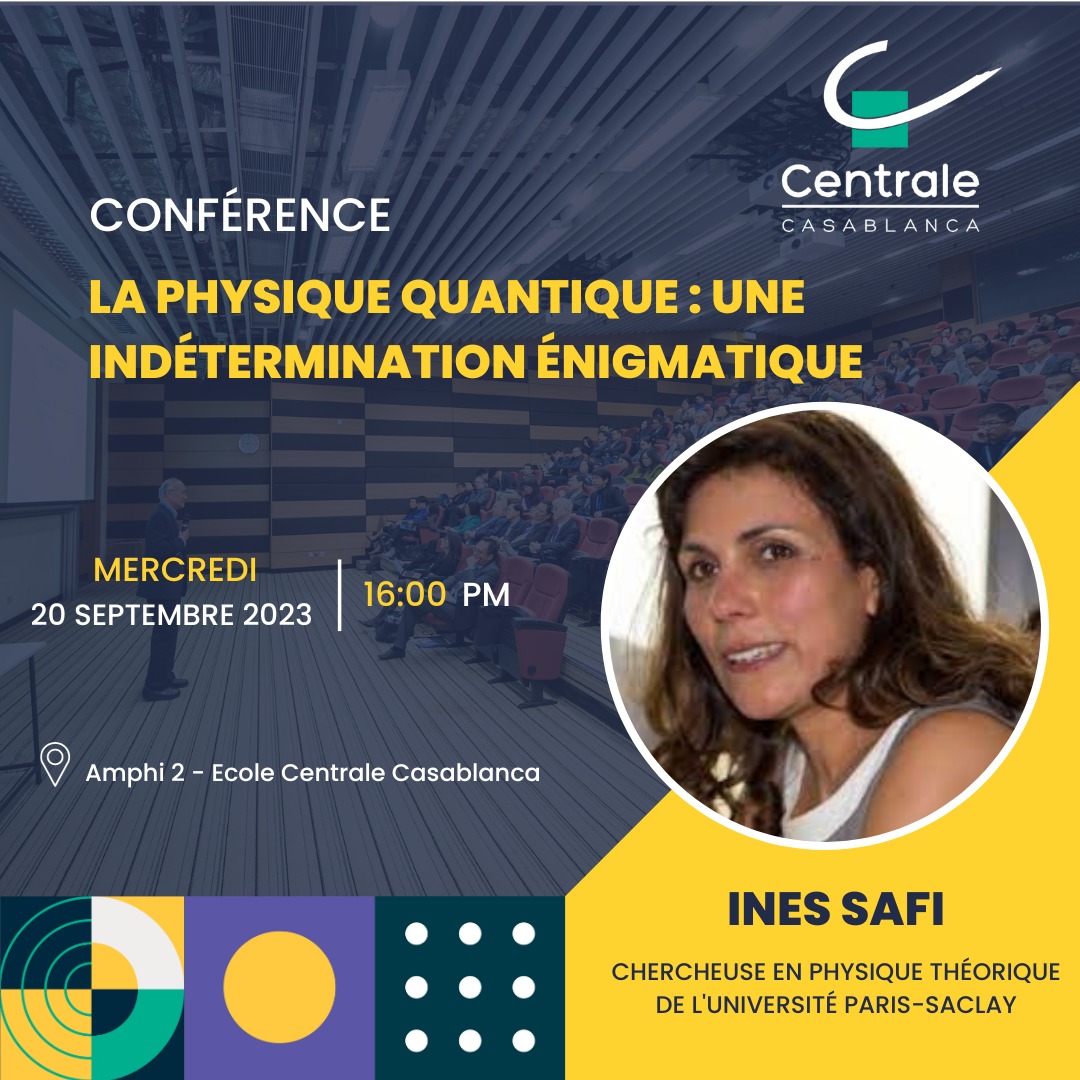
Download the list of conferences by clicking here.
PARTNERS